SMS, email and phishing scam detector — check if a message is fraud
Detect if an SMS, email or WhatsApp is a scam — results in seconds
ORTSLAB is a forensic message analysis engine developed by a certified judicial IT expert. Paste any suspicious SMS, email or WhatsApp message and the engine analyzes over 40 fraud signals: the real sender origin, hidden links, domain authenticity and language patterns used by scammers. No registration, no data storage, nothing to install.
What is this phishing and SMS scam detector for?
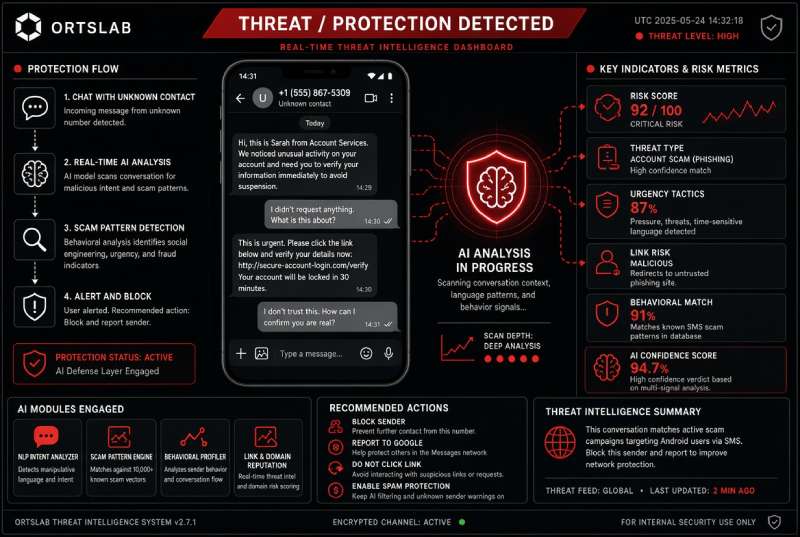
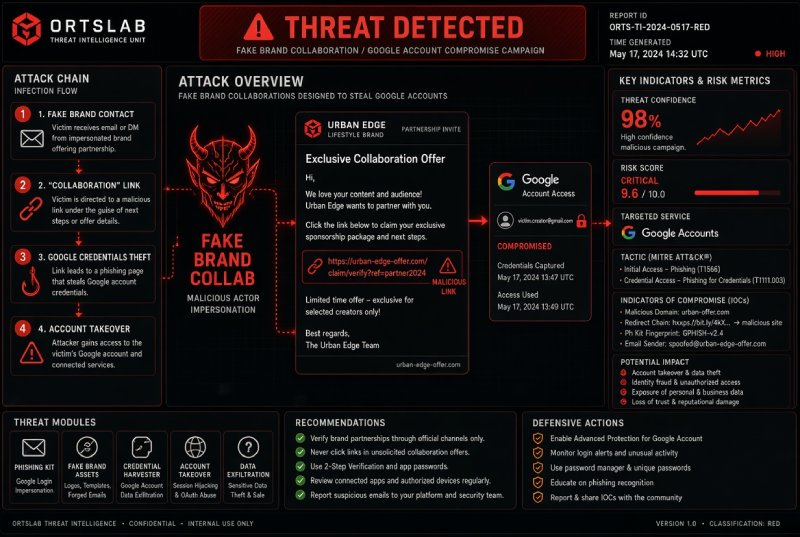
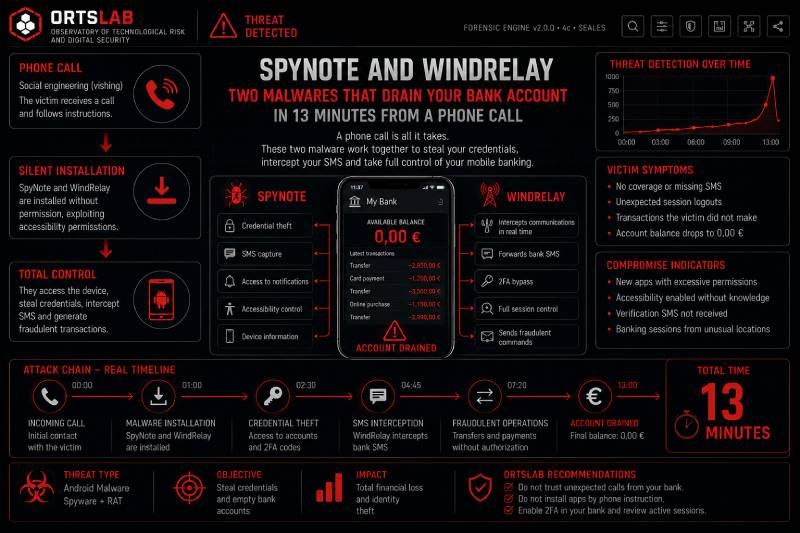
Every day millions of people receive fraudulent messages impersonating their bank, a delivery company, a government agency or services like Netflix or Amazon. These messages — known as phishing (by email) or smishing (by SMS) — trick you into clicking a fake link or providing your personal and banking details.
ORTSLAB analyzes the message in real time and accurately determines whether it is legitimate or a scam, explaining exactly which signals were detected. If the result confirms fraud, you can download a forensic report in PDF format valid for presenting to authorities or in legal proceedings.
Most common SMS and email scams
- Fake bank SMS — Barclays, HSBC, Santander — warning of a suspicious charge or account block.
- Parcel delivery email from Royal Mail, FedEx or UPS with a package on hold requiring customs payment.
- Tax agency email promising a refund or threatening an audit.
- Amazon or Netflix message asking you to update your payment method.
- WhatsApp from a family member from an unknown number asking for urgent money.
- Job offers or prize notifications asking for personal details or an upfront payment.
- PDF invoices or attachments containing malicious code that activates when opened.
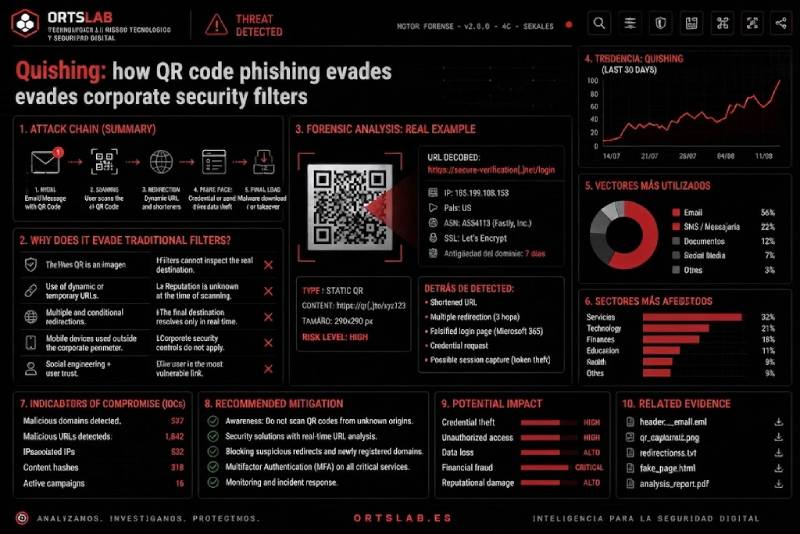
- QR codes in physical or digital messages redirecting to fraudulent sites.
How does the forensic message analysis work?
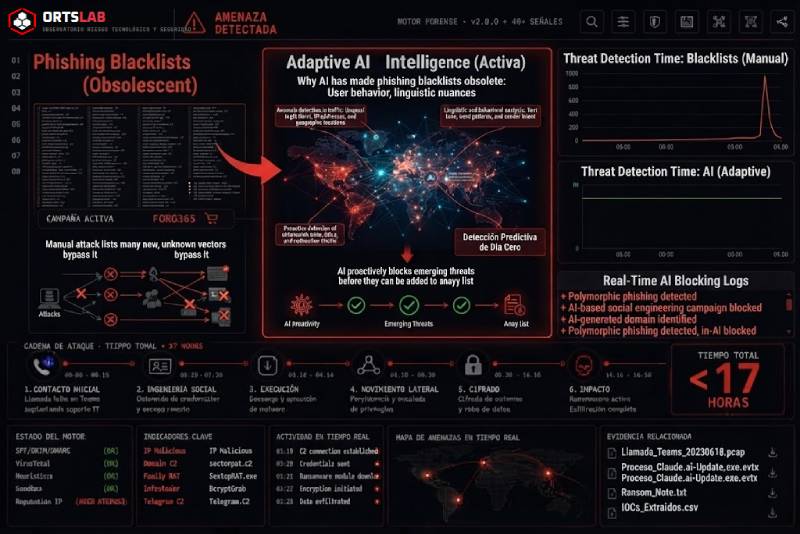
The ORTSLAB forensic engine verifies in real time the sender's authenticity (SPF, DKIM, DMARC), checks whether links redirect to fraudulent domains, queries the domain reputation in international threat databases (VirusTotal) and analyzes domain age via RDAP. It also detects advanced evasion techniques such as Unicode homoglyphs, recently registered domains and malicious QR codes.
The result includes a forensic score, a clear verdict (from Trusted to Danger) and a detailed list of evidence found. Professionals can export the report in PDF forensic format.
What should I do if the message is confirmed as a scam?
Do not reply, do not click any links and do not call any number in the message. If you have already provided banking details, contact your bank immediately to block any potential charges.
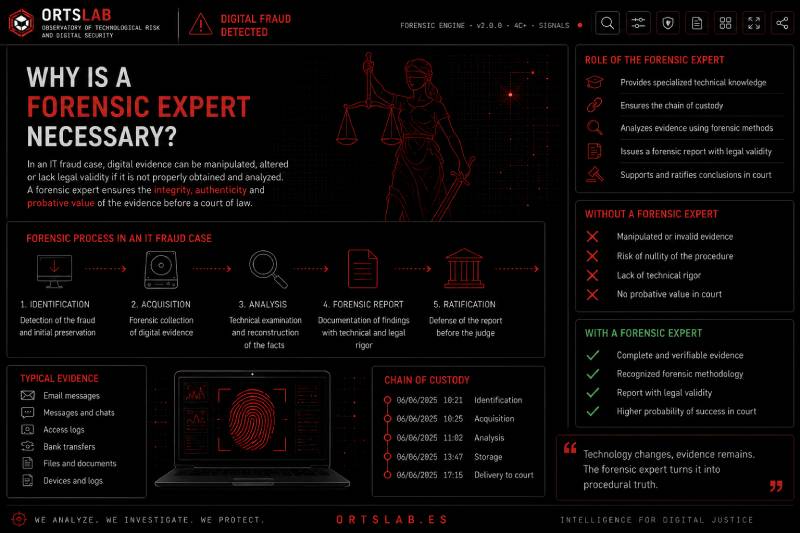
If you need to document the fraud for a formal complaint or legal proceedings, request a signed forensic report from Oscar Orts, certified judicial IT expert.
 EE.UU.
 Francia
 Turquía