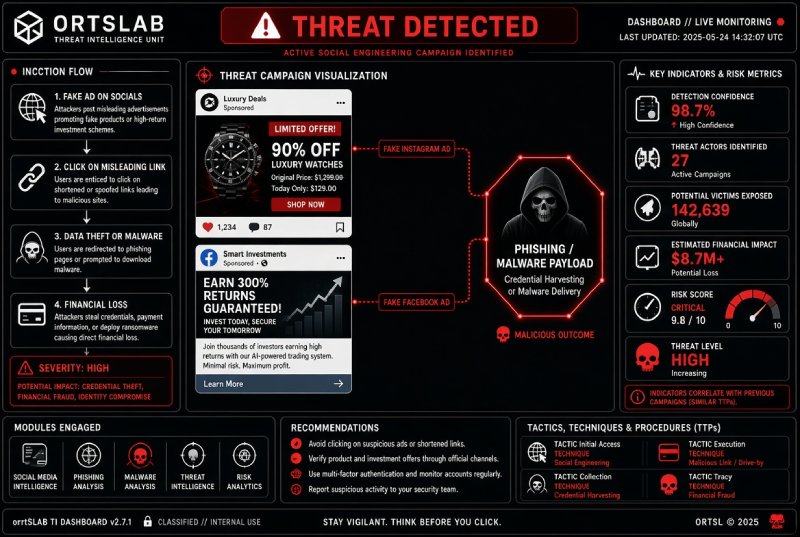
A well-known TV presenter who "reveals" how he got rich investing, a local shop selling everything off because it is closing down, or a cream "recommended" by a consumer organisation. You see them every day between your friends' posts on Instagram, Facebook, YouTube or X, and many of them are scams. This is not just a feeling: according to internal Meta documents reported by Reuters in November 2025, the company itself estimated that around 10% of its 2024 revenue, some 16 billion dollars, came from ads for scams or banned goods, and that its platforms showed around 15 billion "higher-risk" scam ads every day. Meta replied that the documents give a selective view.
There are consequences in Spain too. In November 2025 the Spanish Official Gazette published a five-million-euro fine imposed by the CNMV, Spain's securities regulator, on X's European subsidiary for failing to block ads for a fake investment platform that used the images of famous people and media outlets.
🔍 Suspicious message?
Analyze senders, links or files in real time with our scanner.
The three fake ads you will see most
1. The celebrity who invests. A presenter, a businessman or a famous chef "confesses" in a supposed interview that he makes money with a cryptocurrency or artificial intelligence platform. More and more often the video has been manipulated with AI. The ad leads to a website that imitates a newspaper and asks for your name and phone number. From then on you get calls, you are added to WhatsApp or Telegram groups and pressured to invest more and more. The CNMV considers ads with celebrities promising quick profits an unmistakable sign of fraud.
2. The shop that is closing down. Clothes, shoes or homeware at 70% off, a countdown and a moving story: the old family shop selling off stock because of retirement, a move or closure. In May 2026, the Spanish fact-checker Maldita.es found 129 Facebook accounts posing as clothes shops in Spain, with more than 26,000 promoted posts; 78% of those accounts had been created in the first four months of the year and more than half of their websites had no legal notice. The photos of the "owners" and the videos of happy customers were AI-generated. What you order never arrives, or something completely different does.
3. The miracle product with a fake seal of approval. Slimming pills, joint-pain remedies or gadgets "recommended" by doctors or well-known organisations. In August 2026 OCU, Spain's largest consumer organisation, reported to the police ads for a supposed slimming product that used its name and logo without permission: OCU had never tested or recommended that product.
There is a fourth, less visible but dangerous variant: ads in search engines and social networks that imitate the download page of a well-known program and install malware instead of the program.
How to tell if an ad is fake before you click
No single sign is conclusive, but two or three together say almost everything:
- Easy money or impossible prices. Nobody gives 70% off the whole shop, and nobody gets rich without risk.
- Hurry. Countdowns, "last items", "today only".
- Who is paying for the ad. Under the page name it says "Sponsored". Tap the name: if the page was created a few weeks ago, has changed its name several times or is run from another country, be wary. On Facebook you can see this under "Page transparency", and Meta's Ad Library shows every ad that page is currently running.
- The web address does not match. If the ad claims to be from a brand or a newspaper but the address is a different one, or very recent, it is not who it says it is.
- Signs of AI. Lips out of sync with the voice, strange hands, a robotic voice or photos of people that look too perfect.
- Comments turned off, or all the same. Scammers disable comments or fill them with fake reviews.
Don't do this:
- Don't give your name and phone number in a form reached from an investment ad: it is the way in for the calls from "advisers".
- Don't install remote-control programs (AnyDesk, TeamViewer and similar) because someone who called to "help you invest" asks you to.
- Don't pay by bank transfer, Bizum or cryptocurrency in a shop you don't know: if it is a scam, the money cannot be recovered.
- Don't assume an ad is genuine because it appears on Instagram or YouTube: a platform publishing it does not mean it has checked it.
- Don't pay "a fee" to recover money you have already lost: it is the second part of the same scam.
Do this:
- Before tapping, press and hold the ad and copy the link. Paste it into the Tools Terminal at ortslab.com: you will see the age of the domain, where it really redirects to and a screenshot of the page, without having to open it yourself.
- For any investment, look the firm up on the CNMV website (register of firms and list of warnings). If they offer a deposit or a loan, also check the Bank of Spain register. Not appearing in the warnings does not mean being authorised.
- Search online for the shop's name together with "scam" or "reviews", and check that its legal notice shows a company name, tax ID and full address.
- If you buy, pay by card: if something goes wrong, you can ask your bank to dispute the charge.
- Report the ad on the social network itself ("Report ad"). It helps get it removed before someone else falls for it.
- If you have already given your details or money: cut off contact, tell your bank, keep screenshots and report it to the Policía Nacional or the Guardia Civil. In Spain you can get advice from INCIBE on 017 (free and confidential, 8 am to 11 pm) and, if it was an investment, from the CNMV (900 535 015).
An ad is the only scam message that arrives looking like something serious: it is on a network you use every day, between photos of people you know, and nobody sent it to you. That is why it works. The useful question is not whether the ad looks real, but who is paying for it and where it takes you.